
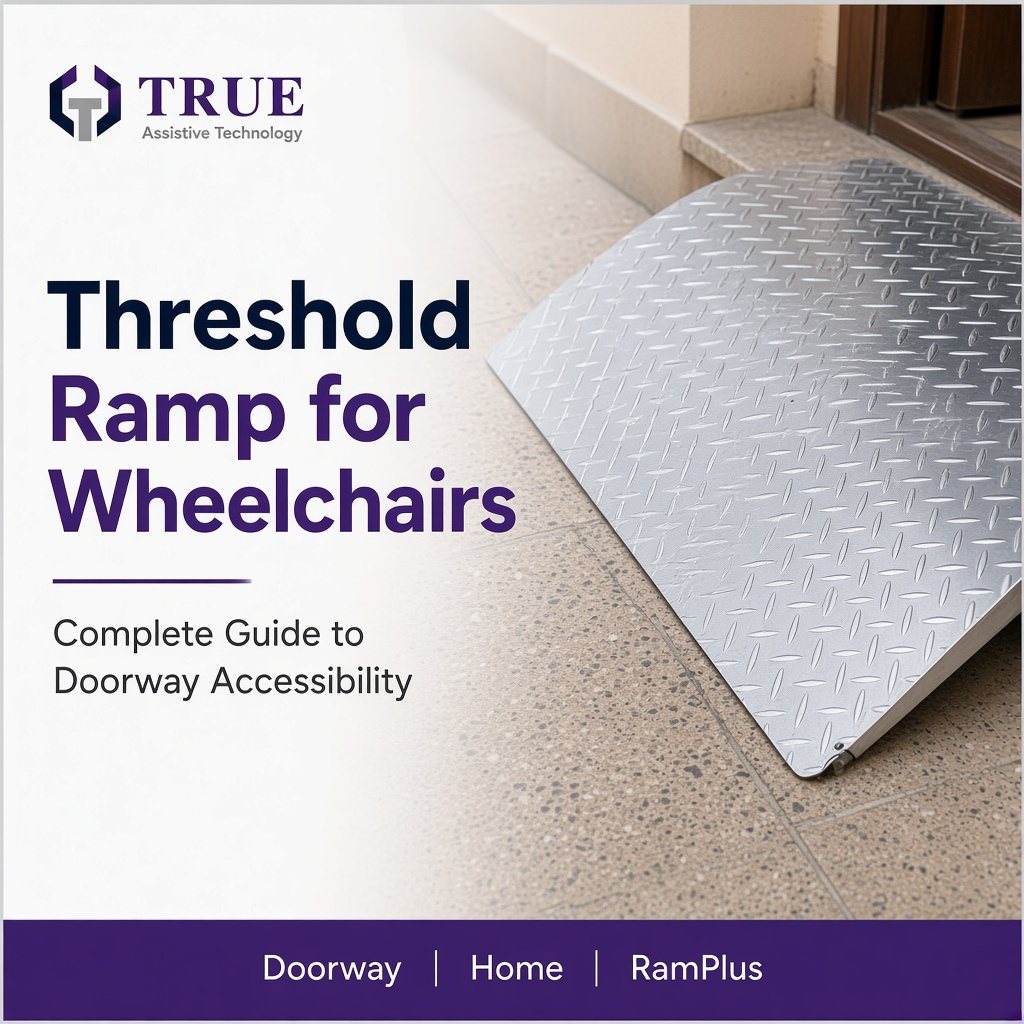
A small step at a doorway may not look like a major obstacle, but even a few centimetres of height can make it difficult for wheelchair users, seniors, and people using walkers or mobility aids to enter and exit a home safely.
A threshold ramp provides a simple solution. It creates a gradual transition over a raised door threshold, helping users move smoothly between two different floor levels without requiring permanent construction or major modifications.
In Indian homes, threshold ramps can be particularly useful at bathroom entrances, balcony doors, kitchen entrances, main doors, and other areas where raised door lips are common.
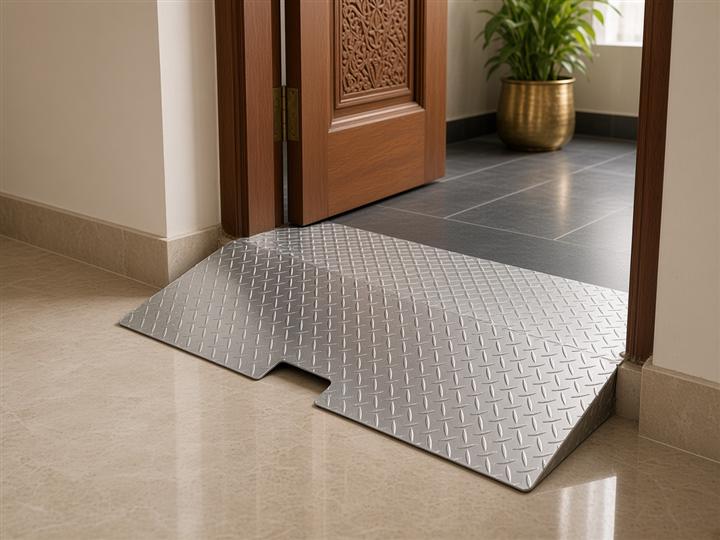
What Is a Threshold Ramp?
A threshold ramp is a small, low-profile ramp designed to bridge a raised doorway or floor threshold.
Unlike a long wheelchair ramp designed for stairs, a threshold ramp is intended for small height differences. Its wedge-shaped design provides a gradual transition that can make it easier for:
- Manual wheelchair users
- Power wheelchair users
- People using walkers
- Seniors with limited mobility
- Mobility scooter users
- Caregivers assisting wheelchair users
- Rollators and other mobility aids
A properly designed threshold ramp can also reduce the need to lift or push mobility equipment over a raised doorway.
Why Are Door Thresholds Difficult to Navigate?
Door thresholds are often installed to separate rooms, prevent water from entering certain areas, or accommodate differences in floor levels.
However, a raised threshold can create a barrier for someone using a wheelchair or walker.
For example, a bathroom doorway may have a raised lip to help prevent water from flowing into the rest of the home. While useful for the room, that small elevation can make independent access difficult.
Similar barriers can occur at:
- Main entrances
- Bathroom doors
- Balcony entrances
- Kitchen doors
- Bedroom entrances
- Office entrances
- Shop entrances
- Small raised landings
A threshold ramp bridges this small gap and creates a smoother transition.
How Does a Threshold Ramp Work?
A threshold ramp uses a gradual incline to connect the lower floor with the raised threshold.
Instead of a wheelchair wheel, walker, or mobility aid suddenly encountering a vertical edge, the ramp provides a sloped surface.
For example:
Floor → Gradual Ramp → Raised Threshold → Doorway
This simple transition can reduce the effort required to move across the doorway.
The ramp should be selected according to the height and width of the threshold, along with the type of mobility equipment being used.
Threshold Ramp vs Regular Wheelchair Ramp
A threshold ramp and a standard wheelchair ramp serve different purposes.
A regular wheelchair ramp is generally longer and is designed to overcome larger height differences such as steps or entrances.
A threshold ramp is designed specifically for smaller level changes.
| Feature | Threshold Ramp | Standard Wheelchair Ramp |
|---|---|---|
| Main purpose | Raised door thresholds | Steps and larger height differences |
| Size | Compact | Longer |
| Design | Low-profile wedge | Extended inclined surface |
| Best for | Doorways and small lips | Steps, entrances and elevated areas |
| Installation | Usually tool-free | Depends on ramp type |
| Portability | Easy to handle | Depends on length |
| Space required | Minimal | More space required |
Choosing the correct type of ramp is important. A threshold ramp should not be used as a replacement for a longer ramp when the height difference is significant. For the full RamPlus range, see our complete wheelchair ramps guide for India.
Where Can You Use a Threshold Ramp?
1. Bathroom Doorways
Bathrooms frequently have raised thresholds or small level differences. A threshold ramp can provide smoother wheelchair and walker access while maintaining a transition between the bathroom and surrounding floor.
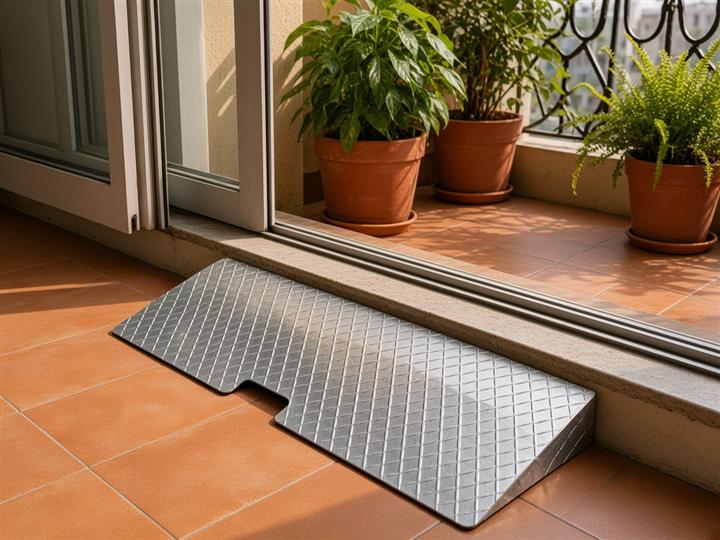
2. Balcony Doors
Balcony entrances may have raised edges that can be difficult for wheelchair users to cross. A compact threshold ramp can help create a smoother transition without requiring major structural changes.
3. Main Home Entrances
A small raised entrance can become an everyday barrier. Installing a threshold ramp can make entering and leaving the house easier for wheelchair users, seniors, and caregivers.
4. Kitchen Entrances
Some homes have small raised edges between the kitchen and other rooms. A threshold ramp can help mobility equipment move across these areas more smoothly.
5. Offices and Commercial Spaces
Threshold ramps can also be useful in offices, clinics, shops, and other buildings where small doorway lips may affect accessibility.
Benefits of a Threshold Ramp
Easy Access
A threshold ramp creates a smoother path across small raised surfaces.
Compact Design
Unlike a long wheelchair ramp, a threshold ramp requires very little space.
No Major Construction
Many portable threshold ramps can simply be positioned where required, avoiding permanent structural modifications.
Portable
A lightweight ramp can be moved or repositioned when required.
Anti-Skid Surface
An anti-skid surface can provide better traction and help improve confidence when crossing the threshold, particularly where moisture may be present.
Useful for Multiple Mobility Aids
Threshold ramps aren't limited to wheelchairs. They can also help people using walkers, rollators, mobility scooters, and other wheeled mobility equipment.
What Should You Check Before Buying a Threshold Ramp?
Before purchasing a threshold ramp, measure the doorway carefully.
1. Measure the Threshold Height
Measure the vertical height from the lower floor surface to the top of the threshold. Do not estimate the height. Even a small difference can affect the ramp's suitability.
2. Measure the Doorway Width
Measure the usable width of the doorway. The ramp should provide sufficient space for the wheelchair or mobility aid to pass comfortably.
3. Check the Mobility Equipment
Consider whether the ramp will be used with:
- Manual wheelchair
- Powered wheelchair
- Mobility scooter
- Walker
- Rollator
Different equipment can have different wheel sizes, widths, and weight requirements.
4. Check the Weight Capacity
Always verify the ramp's load capacity before use. Remember that the required capacity should account for the user plus the weight of the wheelchair or mobility equipment.
5. Consider the Surface
An anti-skid surface is particularly useful for entrances where the ramp may encounter moisture, dust, or changing weather conditions.
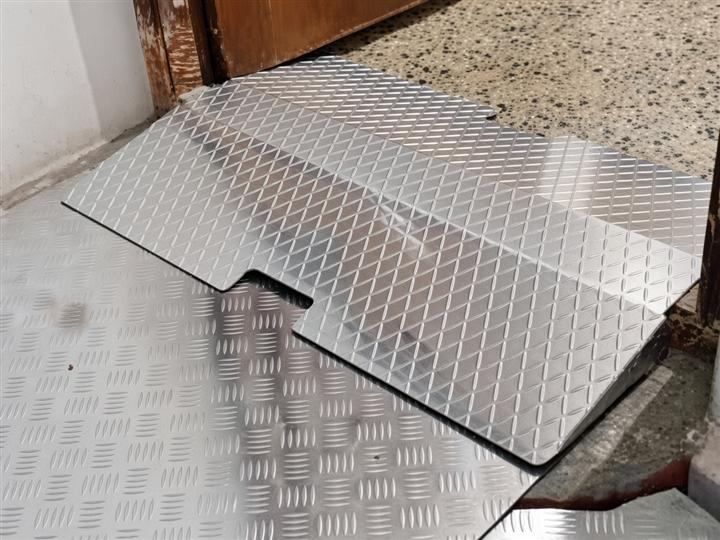
RamPlus Threshold Ramp by TRUEAssist
The RamPlus Threshold Ramp is designed specifically to help overcome small raised door thresholds and landing edges.
It uses a low-profile aluminium design and can be custom-made according to the required door dimensions. Starting from ₹9,999 on the RamPlus Threshold product page.
Key features include:
- Custom-made for the required dimensions
- Lightweight aluminium construction
- Heavy-duty design
- Anti-skid surface
- Rust-resistant construction
- Portable and easy to handle
- No major structural modification required
- Suitable for doorways and small level changes
The RamPlus Threshold Ramp is designed to create a smoother transition for wheelchair users, mobility scooter users, seniors, and people using mobility aids. Explore RamPlus Threshold Ramps.
Why Choose Aluminium for a Threshold Ramp?
Aluminium is commonly used for portable accessibility ramps because it provides a useful combination of strength and relatively low weight.
For a threshold ramp, this can make the product easier to handle while maintaining the durability required for everyday use.
An aluminium threshold ramp can also be suitable for indoor and outdoor applications when appropriately designed and maintained.
How to Measure Your Door for a Threshold Ramp
Before ordering a custom threshold ramp, follow these simple steps:
- Step 1: Measure the vertical height of the threshold.
- Step 2: Measure the available doorway width.
- Step 3: Check the direction in which the door opens.
- Step 4: Check the available floor space around the doorway.
- Step 5: Identify the mobility equipment that will use the ramp.
- Step 6: Share the measurements with the ramp supplier to determine the appropriate design.
Accurate measurements help ensure that the ramp fits properly and provides a practical transition. You can also use our ramp calculator when sizing longer portable ramps for steps.
Is a Threshold Ramp Suitable for Every Step?
No.
A threshold ramp is designed for small height differences, such as raised door lips and low thresholds.
If you need to overcome a full step or several steps, a longer portable wheelchair ramp may be more appropriate.
For example:
- Small door lip → Threshold ramp
- Single step → Portable suitcase ramp
- Narrow or uneven access → Split ramp
- Multiple steps → Longer wheelchair ramp
Selecting the right ramp for the height and application is essential for safe and practical mobility. Compare home options in our Suitcase vs Split vs Threshold guide .
Threshold Ramp for Home Accessibility
Accessibility does not always require expensive renovation.
Sometimes, a small modification can remove an everyday barrier.
A threshold ramp can help transform difficult doorways into smoother transitions, making it easier for wheelchair users and seniors to move around their homes.
For families supporting an elderly parent or a person with reduced mobility, addressing small barriers such as door thresholds can make everyday movement more convenient and independent.
Frequently Asked Questions
What is a threshold ramp?
A threshold ramp is a compact, low-profile ramp designed to bridge small raised surfaces such as door thresholds and landing edges.
What is a threshold ramp used for?
It is used to provide smoother access across raised doorways, bathroom entrances, balcony doors, kitchen thresholds, and other small level changes.
Can a wheelchair use a threshold ramp?
Yes. A properly sized threshold ramp can help manual and powered wheelchair users cross small raised thresholds more smoothly.
Can I use a threshold ramp for a step?
It depends on the height of the step and the ramp design. Threshold ramps are primarily intended for small level changes. Larger steps generally require a longer wheelchair ramp.
Are threshold ramps permanent?
Not necessarily. Portable threshold ramps can be placed and removed without permanent structural changes.
How do I choose the correct threshold ramp?
Measure the threshold height and doorway width first. Then consider the wheelchair or mobility aid, available space, ramp capacity, surface, and required incline.
Are aluminium threshold ramps durable?
Aluminium is lightweight and durable, making it a practical material for portable accessibility ramps when properly designed for the intended load and application.
Make Doorways Easier to Access
A raised doorway may be a small obstacle, but for someone using a wheelchair, walker, or mobility scooter, it can become a significant daily barrier.
A threshold ramp provides a simple way to create a smoother transition without major construction.
For homes, offices, clinics, and other spaces, choosing the right ramp based on threshold height, doorway width, mobility equipment, and load requirements can make everyday movement easier.
Explore the RamPlus Threshold Ramp by TRUEAssist for a custom-made accessibility solution designed around your doorway requirements.